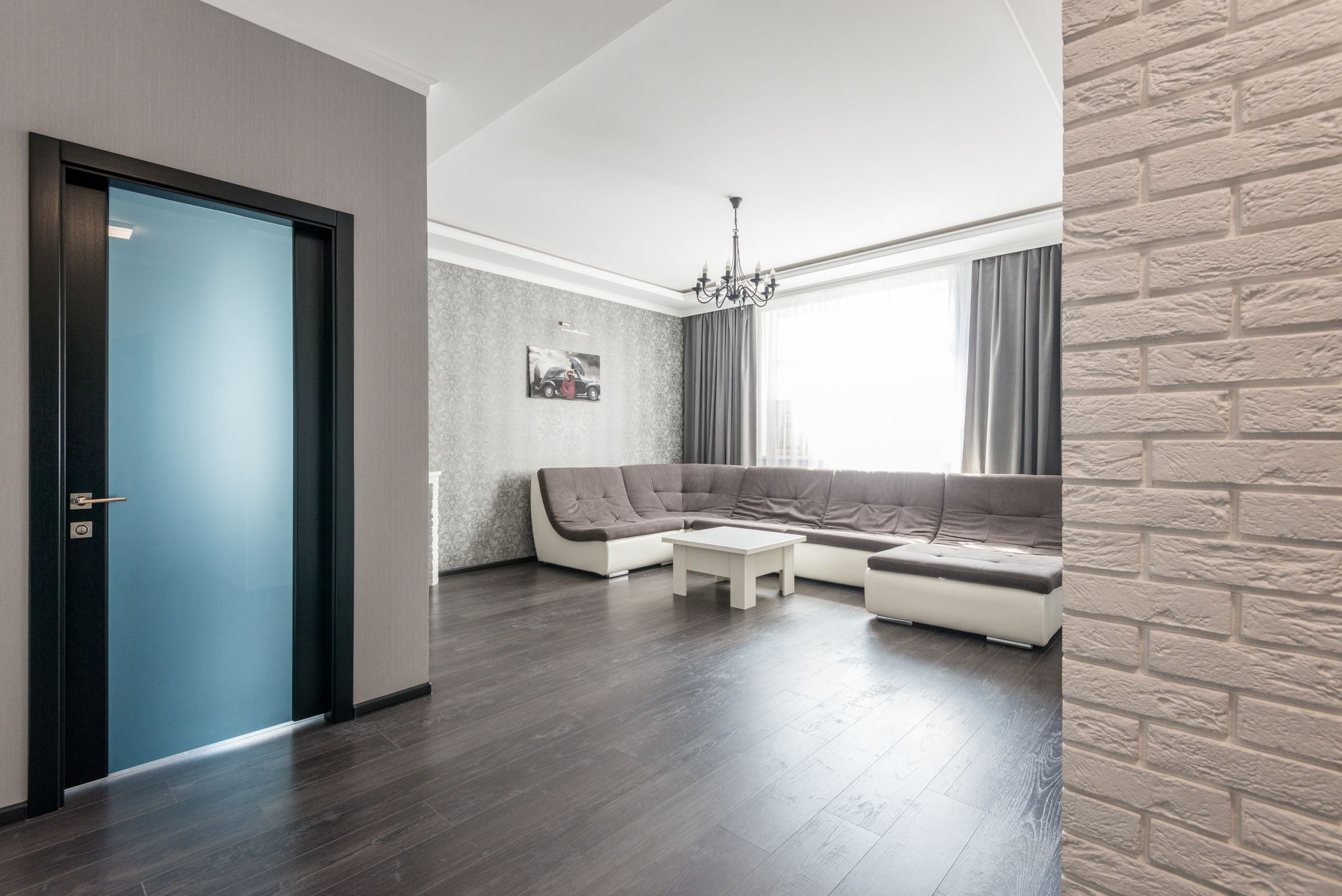
Laminate Flooring in Pennsylvania: Done Properly, and Where It's a False Economy
Laminate has spent twenty years being the punchline and has quietly got a great deal better. It is still a wood product, and in Pennsylvania that is the whole story.
What laminate actually is
Laminate is a high-density fibreboard core — compressed wood — under a printed decorative layer
and a hard-wearing melamine top. The top surface is genuinely tough: modern laminate resists
scratches better than most real hardwood, which is why it does well in a house with large dogs.
The core is the problem. HDF is wood, and wood swells. A laminate plank that takes on water at a
joint expands irreversibly and the edge lifts, and no amount of drying puts it back.
Laminate or luxury vinyl plank?
This is the real decision, and in Pennsylvania it usually breaks the same way:
- Choose laminate for above-grade living space, bedrooms and hallways, where you
want the hardest wear surface for the money and water is not a realistic threat. It is also warmer
and quieter underfoot than SPC vinyl, and better laminate has a more convincing texture than most
mid-range vinyl. - Choose luxury vinyl plank for anything below grade, anything with a plumbing
fixture in it, and any ground floor that has flooded before or could.
Water-resistant laminate exists and is a real improvement, but read the warranty rather than the
box. “Water resistant” usually means a specified number of hours of surface exposure, which covers a
spilled glass and does not cover a dishwasher hose.
What laminate costs in Pennsylvania
Installed, laminate runs roughly $3 to $10 a square foot in Pennsylvania. It is
consistently the cheapest hard-surface floor to install because it floats — no nails, no adhesive,
and a competent crew moves quickly through an empty room.
An estimate, not a quote. These are planning ranges for Pennsylvania, not a quote. What you actually pay depends on your rooms, your subfloor and the material you choose — final price depends on your project.
Where it becomes a false economy is when it goes down over a floor that needed prep. Laminate
floats, and a floating floor over an uneven old plank subfloor will click, bounce and eventually
fail at the joints. That underlayment or levelling cost is not a contractor upselling you; it is the
difference between an eight-year floor and a two-year one.
Thickness and the AC rating
Two numbers to ask for. Thickness — 8mm is common, 12mm feels considerably more solid underfoot
and hides subfloor imperfection better. And the AC rating, which measures abrasion: AC3 is
residential, AC4 and AC5 are commercial grades and are worth the small premium in a busy hallway.
Frequently asked questions
Can laminate go in a basement?
It is not the right choice. The core is wood and below-grade slabs push moisture upward
continuously. Rigid-core vinyl plank does the same job in that room without the risk.
Can laminate be refinished?
No. The wear layer is a printed melamine surface, not wood — once it is worn through, the plank
is replaced rather than sanded. That is the trade you are making for the price.
Does laminate need an underlayment?
Almost always, and over a concrete slab it needs a vapor barrier as well. Some products come
with the pad attached; check before you buy a second one, because doubling it up makes the floor
spongy and voids most warranties.