Stair Treads, Risers and Landings in Pennsylvania Homes
A staircase is the most-used floor in the house and the most expensive per square foot to finish. In a Pennsylvania rowhome it is also usually the oldest thing in the building that you still walk on every day.
Why stairs cost what they do
Everything about a staircase is hand work. Every tread is measured individually because a
century-old staircase is not square, every riser is scribed, and nothing can be laid out in a sheet
and cut in a straight line. Stairs are priced per step rather than per square foot for exactly this
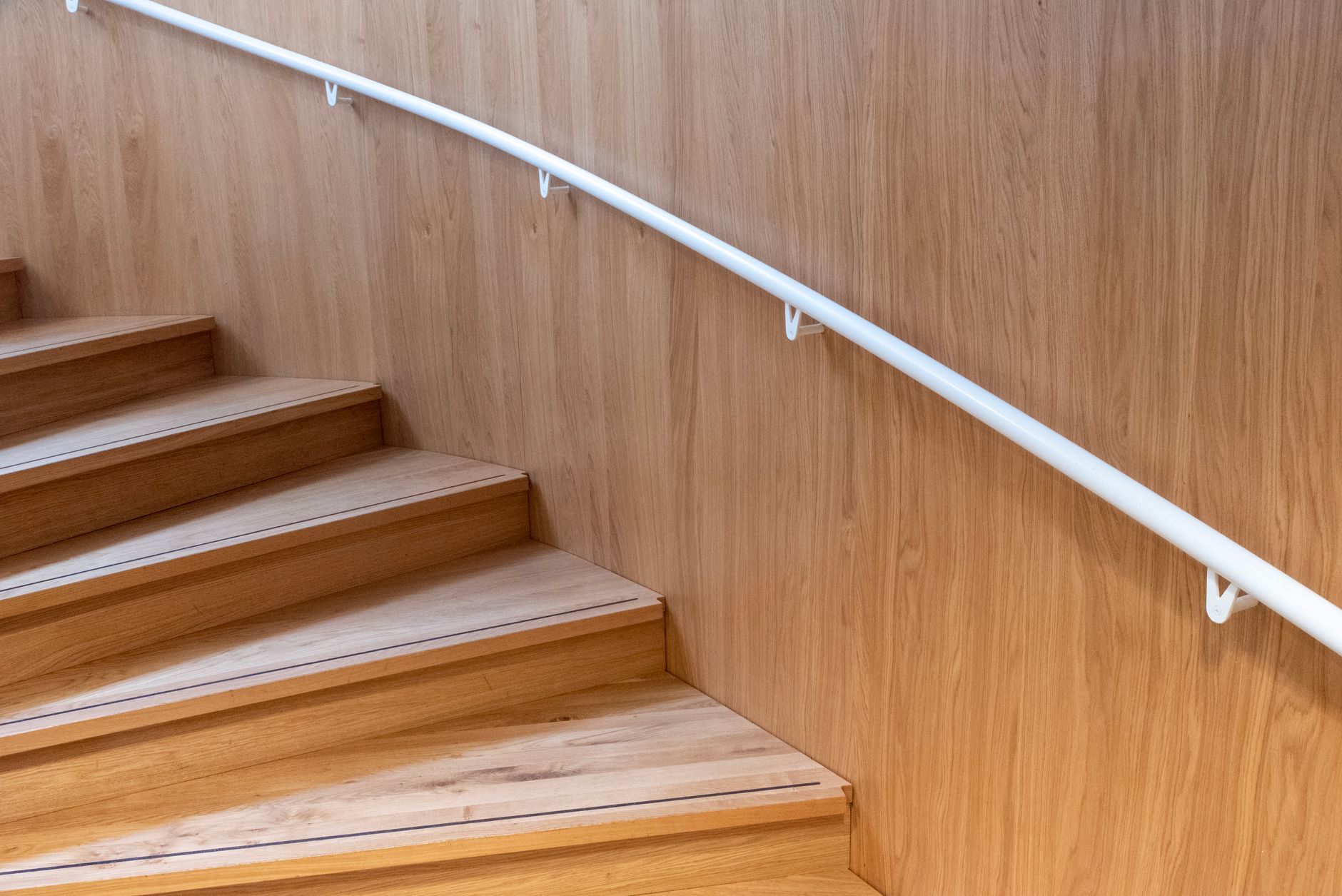
reason, and a winder — the fan of wedge-shaped treads at a turn — costs more again because every
tread in it is a different shape.
Refinish, cap, or replace
Three genuinely different jobs, in ascending order of cost:
- Refinish — sand and refinish the existing treads. Available if the treads are
solid hardwood with enough thickness left, which in an older Pennsylvania house they often are, even
under carpet and several coats of paint. - Retread or cap — a new hardwood tread laid over the existing one, usually with
new risers. This is the standard answer when the original treads are pine, painted, or too worn to
sand, and it is what most “hardwood stairs” quotes actually describe. - Replace — new treads and risers on the existing stringers. Necessary when the
treads are structurally gone, and the point at which the cost starts to approach a new staircase.
Capping adds height to each tread. That sounds trivial and is not: it changes the rise of the top
and bottom steps relative to the floors they meet, and an inconsistent riser height is both a code
issue and the specific thing that makes people trip.
What stairs cost in Pennsylvania
Stairs are quoted per step, and in Pennsylvania a tread-and-riser step typically runs from around
$55 to $130 per step for finishing work, with full replacement well above that.
A standard flight of thirteen to fifteen steps is therefore a job in its own right rather than a
line item on a room.
An estimate, not a quote. These are planning ranges for Pennsylvania, not a quote. What you actually pay depends on your rooms, your subfloor and the material you choose — final price depends on your project.
Carpet on stairs is priced per step too, and it is the cheaper option by a wide margin — it is
also the safer surface, which is worth weighing in a house with steep old treads.
The old-staircase issues worth knowing
Two things come up constantly in Pennsylvania houses built before modern code:
- Inconsistent risers. Old staircases very often have a first or last step that
is a different height from the rest, because floors were built up over the years. Current code is
strict about this; an existing staircase is usually grandfathered, but anything that changes the
rise brings it back into the conversation. - Handrail and baluster spacing. Original balusters are frequently spaced far
wider than the modern four-inch sphere rule. Replacing a railing generally means meeting today’s
spacing, which is worth budgeting for before you start.
Frequently asked questions
Can I put hardwood on stairs if I have carpet now?
Usually yes. Under stair carpet you will often find solid treads that were never meant to be
seen — pine, painted, with tack-strip holes at the back. Those get capped rather than refinished.
Do stair treads have to match my floor exactly?
They do not, and matching a new tread to an existing floor perfectly is difficult because the
floor has ambered. A deliberate contrast — darker treads, painted risers — is usually a better
outcome than a near-miss.
Is a squeaky old staircase a structural problem?
Usually not. Most squeaks are a tread rubbing where the glue blocks under it have dried out, and
they are fixable from underneath if the stairs are open to a basement. It is worth doing before the
finished surface goes on.