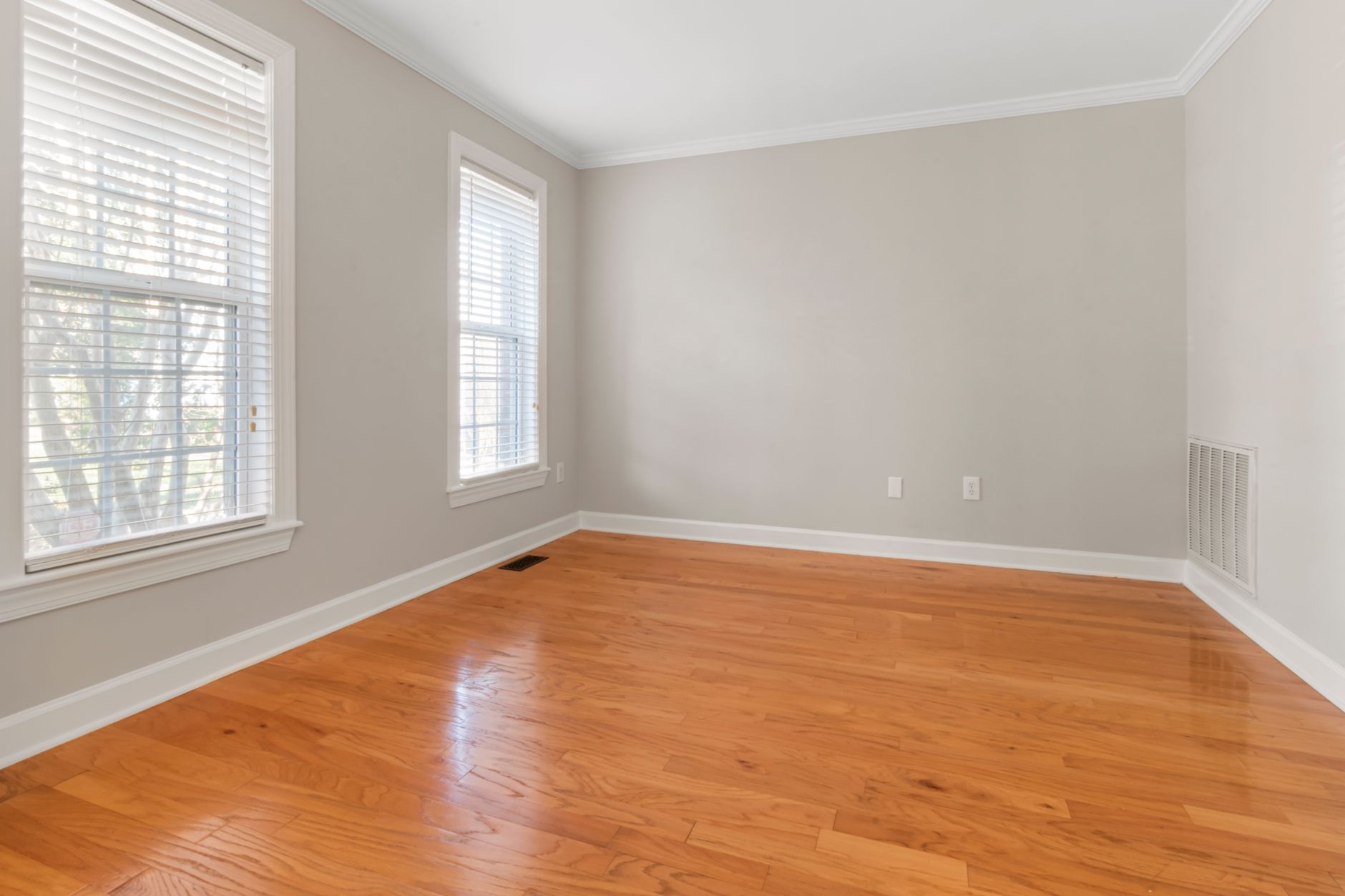
Covering an old floor is usually cheaper up front and faster, but it only works when the floor underneath is flat, stable, and not hiding a problem. Tearing it out costs more and takes longer, but it’s the only way to find out what’s actually under there — and in a lot of Pennsylvania houses, that matters more than the labor bill.
Is it ever okay to just put a new floor over the old one?
Yes, for certain material combinations. Luxury vinyl plank and laminate are engineered to float over a sound, flat existing floor — including old vinyl, ceramic tile, or a well-adhered hardwood — as long as the surface is clean and level within the manufacturer’s tolerance. Carpet almost always gets pulled regardless, since padding and tack strips don’t layer.
What doesn’t float well is anything rigid going over anything uneven. Tile over tile, or hardwood nailed over a cupped old floor, tends to telegraph every flaw in the surface below and can crack or gap within a year or two.
What does tearing out the old floor actually involve?
Removal means pulling up the existing surface down to the subfloor, hauling the debris out, and inspecting what’s left before anything new goes down. On this site, removing the old floor runs $1-$4 per square foot as a planning range — the final number depends on the material coming out, whether there’s a second layer underneath, and what the subfloor turns out to be once it’s exposed. These are estimate-only figures; a reader’s own project may land outside them depending on access, disposal fees, and local labor rates.
Tile and multiple layers of flooring push removal toward the top of that range. A single layer of carpet and pad is close to the bottom. Hardwood that’s glued down, rather than nailed, is its own category and can take considerably longer to remove cleanly.
When does covering the floor make more sense than removing it?
Covering makes sense when the existing floor is flat, structurally sound, and made of a material compatible with what’s going on top — and when the reader isn’t trying to gain ceiling height or fix a height mismatch at doorways. It’s the faster, lower-labor path when those conditions are met.
A flat, well-bonded sheet vinyl floor in good condition is a reasonable base for luxury vinyl plank. So is a single layer of ceramic tile that isn’t cracked or hollow-sounding, provided the new floor is also a floating product rather than something nailed or thin-set directly to it. Laminate behaves the same way — it needs flatness, not a particular substrate.
The tradeoff is height. Every layer left in place raises the finished floor a little, which can leave a new floor sitting proud of an adjacent room, create a step at a threshold, or shave clearance under an existing door. In small additions and bathrooms this adds up fast.
When should the old floor come out instead?
The old floor should come out when it’s uneven, failing, or unknown — and in a lot of Pennsylvania homes, “unknown” is the honest answer until someone actually looks. Soft spots, visible water staining, squeaks that have gotten worse, or a floor that’s clearly out of level all call for removal rather than covering over the problem.
Tile, natural stone, and any rigid flooring need a flat, rigid subfloor to begin with — covering over an uneven old floor just transfers the flaw upward. Cracked grout lines that reappear in the same spots after a repair are usually a sign of movement underneath, not a finish problem, and that movement doesn’t go away because a new floor was placed on top of it.
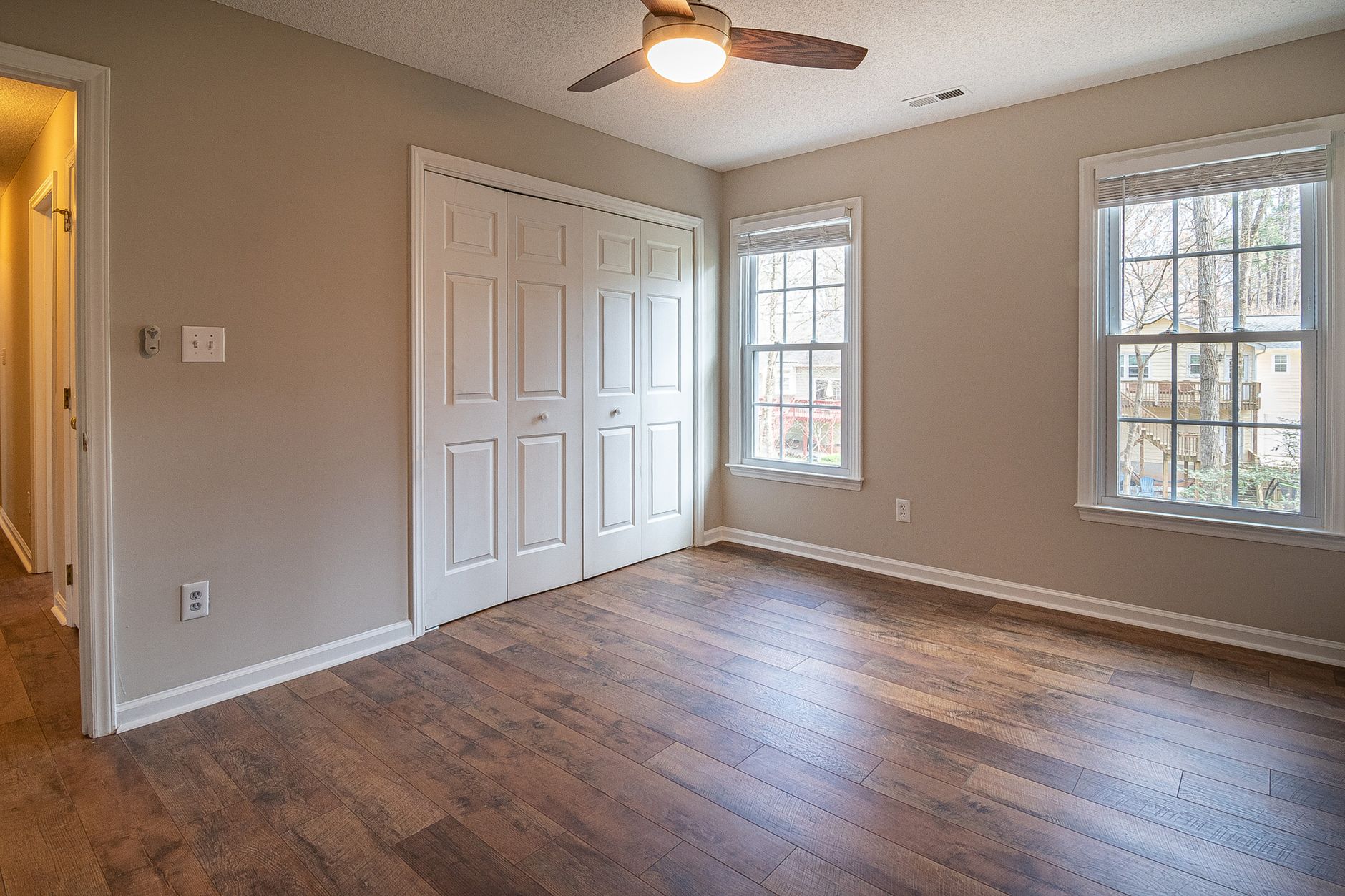
What does Pennsylvania’s old housing stock change about this decision?
It changes almost everything, because the state’s housing is genuinely old. The median Pennsylvania home was built in 1965, and a quarter of the state’s homes predate 1940, according to the U.S. Census Bureau’s American Community Survey — figures that put Pennsylvania among the oldest housing stock in the country. That means a much higher share of covering-or-removing decisions here involve something a newer-build state wouldn’t have to think about.
Three things come up constantly in these houses:
- 9×9 tile from 1940-1980. Many homes in this build range have old resilient floor tile, and some of that tile — or the black mastic adhesive under it — may contain asbestos. Testing is the next step, not a visual guess, and a certified laboratory is the right authority for that, not a flooring estimate.
- Diagonal plank subfloors instead of plywood. Pre-1940 construction commonly used 1×6 boards laid diagonally rather than sheet plywood. These subfloors behave differently under rigid flooring and change what can safely be floated or nailed on top.
- Joists that flex more than current code allows. Older framing was built to older standards. Deflection that was acceptable decades ago can still crack tile or stone set today, even on a brand-new subfloor layer.
Any of these three can turn what looked like a simple covering job into a removal-and-repair job the moment the old surface comes up. For a full walk-through of how these conditions interact, the site’s old-house flooring guide covers what each one means for material choice. The guide to 9×9 floor tile and the piece on what a diagonal plank subfloor means for flooring options go deeper on those two specifically, and why old floor joists crack tile two winters later explains the deflection problem in detail.
What if there’s hardwood under the carpet or old tile?
If there’s solid hardwood underneath, removal is often worth it even when covering would technically work, because the original floor can sometimes be refinished rather than replaced. Mid-century homes across Pennsylvania frequently have narrow-strip oak hiding under carpet that was installed decades ago and never pulled back up.
Refinishing that floor, where it’s in sound condition, runs $3-$8 per square foot as a planning range — well below installing something new on top of it, though the final figure depends on the floor’s condition, the number of coats, and how much sanding it needs. These are estimate-only ranges; actual bids vary by project. Before deciding to cover a floor with carpet or vinyl, it’s worth checking what’s underneath first. The site’s guide on how to tell if there’s hardwood under your carpet walks through the signs, and refinish or replace old hardwood floors covers what tips that decision once the floor is exposed.
How much does each path actually cost?
Covering saves the removal line item but doesn’t change the cost of the new material itself. Installed flooring costs on this site run from $2 per square foot for the least expensive luxury vinyl plank up to $40 per square foot for natural stone, with hardwood, tile, carpet, and laminate falling in between — see the full breakdown on the Pennsylvania flooring cost hub. Removal, where it applies, adds $1-$4 per square foot on top of whichever material is going in. All of these are planning ranges, not quotes — actual project costs depend on square footage, the condition found underneath, and local labor rates, which vary by city and county across the state.
Because removal cost depends so heavily on what’s found once the old floor comes up — a second layer, a subfloor repair, structural work for deflection — a single flat number can’t responsibly cover every case. The flooring cost estimator walks through material, square footage, and removal needs together and gives a planning range based on what the reader actually has, rather than a generic average.
What should happen before either decision gets made?
Two things should happen before a floor gets covered or torn out, and neither one is a step this site can do for a reader. The first is testing, where the floor in question is resilient tile or sheet flooring installed before 1980 — a certified laboratory is the right authority to confirm whether asbestos is present, not a visual inspection. The EPA publishes general guidance on older building materials that contain asbestos, and that’s the right starting point for understanding the testing process.
The second is confirming what, if anything, the local municipality requires. Pennsylvania enforces building permits under the Uniform Construction Code at the municipal level, which means permit requirements for flooring work — especially anything that touches subfloor or structural repair — are set locally and vary from one township or city to the next. The reader’s own municipal building office is the authority on that question, not a statewide rule.
If a contractor is involved in either the removal or the installation, Pennsylvania’s Office of Attorney General maintains a public register of home improvement contractors, which is worth checking before signing anything.
Does the city matter to this decision?
It matters indirectly, through the age of the housing stock rather than any city-specific rule. Philadelphia’s median home was built in 1949, with 39.9% of homes predating 1940. Pittsburgh’s median is 1942, with 48.3% pre-1940. Scranton, Lancaster, and Reading all sit even further back — median years of 1938, with more than half their housing built before 1940 in Reading’s case. Harrisburg, Allentown, Erie, and York fall somewhere in between.
In practice, this means a floor-covering decision in Reading or Scranton is statistically more likely to run into a diagonal subfloor, old tile, or undocumented hardwood than the same decision in a newer suburb. It doesn’t change the mechanics of the decision — flat and sound still means covering is viable, uneven or unknown still means removal is the safer call — but it does mean the odds of hitting a complication are higher in the state’s older cities. The Pennsylvania flooring by city hub breaks down each city’s housing stock in more detail.
What’s the honest shortcut for deciding?
If the existing floor is flat, well-bonded, and a single layer, and the new material is a floating product like luxury vinyl plank or laminate, covering is a reasonable choice. If the floor is tile, stone, or anything rigid going in, or if the old floor is cracked, soft, uneven, or its age and composition are unknown, removal is the more defensible path — both for the new floor’s performance and for finding out what’s actually there before a second floor hides it for another thirty years.
Material choice interacts with all of this too; the flooring materials hub covers where each of the eight common materials performs well and where it doesn’t, which is worth reading alongside this decision rather than after it.
PA Floors is an independent Pennsylvania flooring resource. We do not sell or install flooring, we do not quote jobs, and nobody from this site will call you. Cost figures here are published planning ranges for Pennsylvania, not quotes — what you actually pay depends on your rooms, your subfloor and the material you choose, and the final price depends on your project. Photography is licensed stock used to illustrate materials and rooms; it is not work by anyone connected to this site. Building code and permit requirements are enforced locally in Pennsylvania, so confirm anything regulatory with your own municipality before you rely on it.
Any prices mentioned are indicative only. Tool prices move constantly and vary by market, by retailer, and by whether a kit includes batteries or a charger — check the current price yourself before deciding.
Featured image: Photo by Curtis Adams via Pexels.