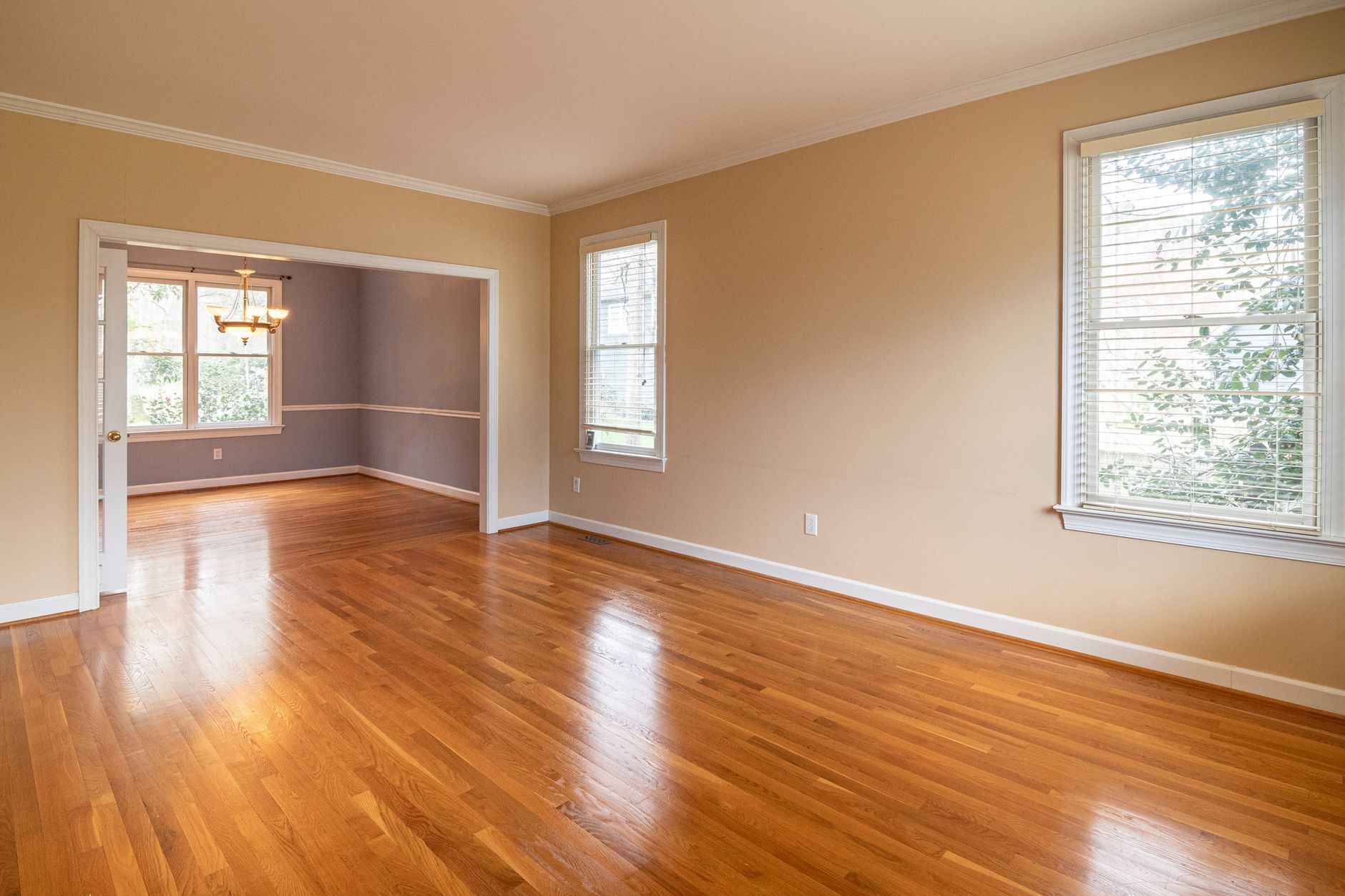
Most original hardwood under carpet or in worn condition in an older Pennsylvania home can be refinished rather than torn out, because ¾-inch solid oak typically has enough wood above the tongue-and-groove to be sanded several times over a century of use. Replacement makes sense only when boards are cupped beyond flat-sanding, water-damaged through the subfloor, or missing in sections that can’t be matched.
How do you know if old hardwood can be refinished?
Drive a finish nail into a low-traffic spot, like a closet floor, and pull it partway back out. If there is at least 3/16 inch of solid wood above the tongue, the floor has enough material left for a standard sand-and-refinish. Thinner than that, or if boards flex underfoot, a professional inspection is the next step rather than a guess.
- Gaps between boards that open and close with the seasons are normal in a house built before central humidity control — not a defect.
- Cupping or crowning across a wide area often points to a moisture source under the floor, not just wear.
- Dark stains or soft spots near exterior walls or bathrooms usually mean water damage reached the subfloor.
- Squeaks are almost always a subfloor or joist issue, not a reason on their own to replace the finish floor.
What does refinishing actually cost in Pennsylvania?
Refinishing existing hardwood runs $3 to $8 per square foot, covering sanding, staining if desired, and two to three coats of finish. These are planning ranges, not a quote — the final number depends on the floor’s condition, the number of coats, and whether trim and stairs are included, so a firm figure requires measuring the actual rooms with the flooring cost estimator.
New hardwood installed, by comparison, runs $6 to $21 per square foot depending on species and grade. That spread is wide because it covers everything from builder-grade white oak to wide-plank walnut, and it assumes the subfloor underneath is sound — which in a pre-1940 Pennsylvania house is not always a safe assumption. The flooring cost by material and city hub breaks both ranges down further.
Why does the age of the house matter so much here?
Pennsylvania has the fourth-oldest housing stock in the country: the median home in the state was built in 1965, and a quarter of homes predate 1940, according to the U.S. Census Bureau’s American Community Survey. In cities like Scranton, where the median home dates to 1938 and 51.8% of housing predates 1940, or Reading, at 1938 and 56.9% pre-1940, original hardwood is common — but so is everything built underneath it.
Homes from that era were often framed with diagonal 1×6 plank subfloors instead of plywood, and floor joists that meet historic spans rather than current code deflection limits. Neither of those things stops a refinish. Both of them matter if the plan changes to replacing the hardwood with tile, because a bouncier old floor cracks rigid materials that a modern subfloor would hold fine. The old-house flooring hub covers subfloor and joist checks in more detail.
What’s usually hiding under carpet in a mid-century Pennsylvania house?
Narrow-strip oak, most often — carpet installed from the 1950s through the 1980s was frequently laid directly over hardwood that homeowners at the time considered outdated rather than damaged. Pulling it up is often the cheapest way to find a floor worth refinishing rather than replacing.
It’s also common to find a layer of 9×9 vinyl composition tile from that same window, either under the carpet or in an adjacent room like a kitchen or basement rec room. Tile of that size and era can contain asbestos, and there is no way to tell by looking. The general position from public health authorities is that intact material poses lower risk than material that is cut, sanded, or dry-scraped. Testing by an accredited lab, not a guess from a photo, is the reader’s next step before any of it is disturbed — the EPA publishes background on asbestos-containing flooring materials for exactly this reason.
When is replacing the hardwood the better call?
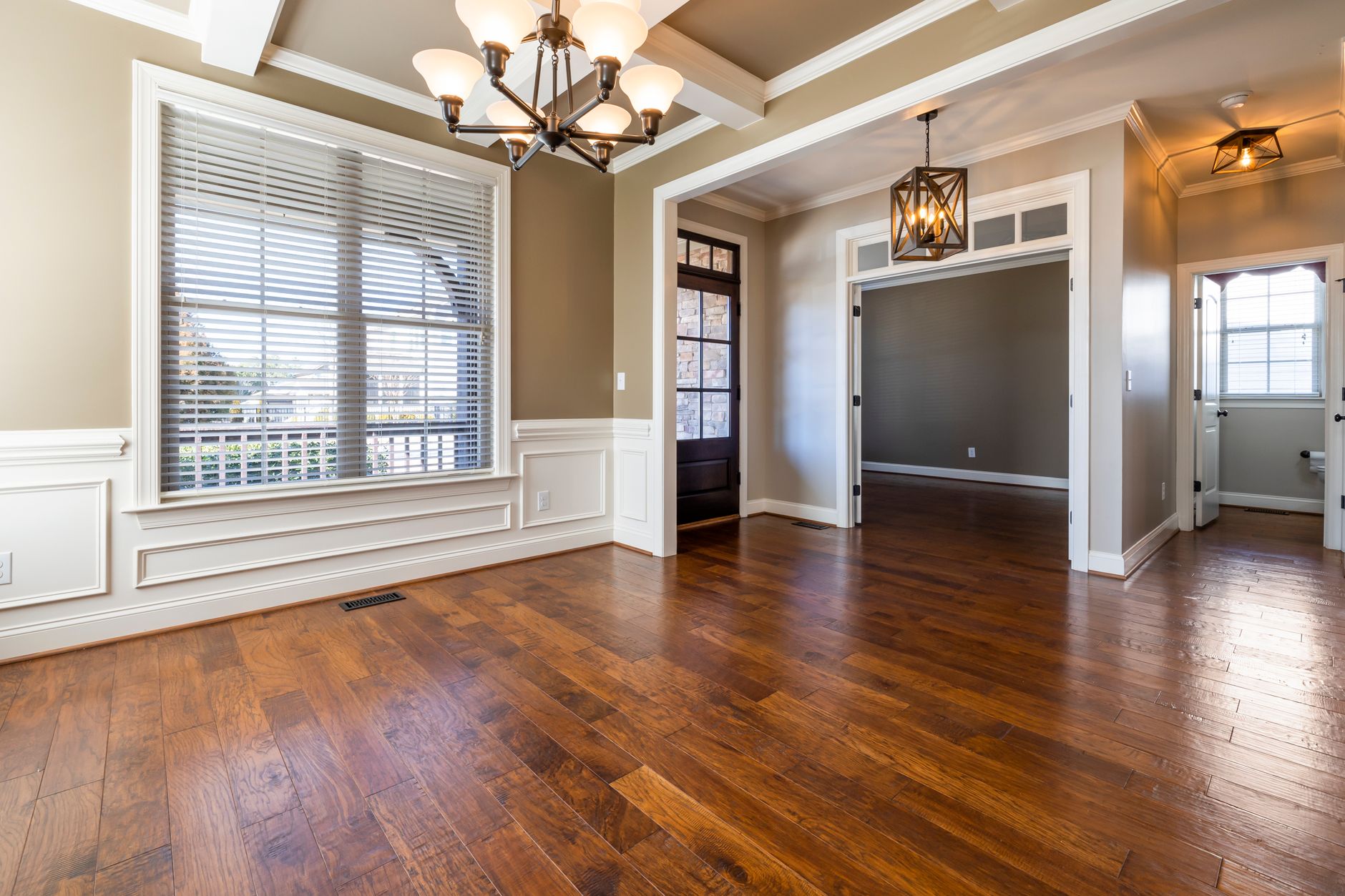
Replacement is worth considering when the original wood is damaged past what sanding can fix, when the layout has changed enough that patched-in sections would never blend, or when the household simply wants a different look than what’s there. None of those are wrong reasons — they’re just different from “the floor is fine but tired,” which is a refinishing problem, not a replacement one.
- Water damage that reached the subfloor, not just the surface finish.
- Boards thinner than roughly 3/16 inch above the tongue after prior sandings.
- A room being combined or reconfigured, where new flooring is easier than matching old.
- A desire for wide-plank or engineered product instead of narrow strip oak — a style choice, not a repair.
Even where hardwood isn’t the right fit — a below-grade basement with moisture, for instance, or a mudroom that takes standing water — it’s worth naming that plainly rather than defaulting to it everywhere. The flooring materials hub covers where each of the eight common materials, hardwood included, tends to fail.
What about stairs?
Stairs connected to an old hardwood floor are usually priced separately from the flat square footage, at $55 to $130 per step, because each tread and riser is cut and finished individually rather than run through in one pass. That range covers everything from a simple refinish of existing treads to full replacement with new risers, and it depends heavily on the number of steps and whether the stringers underneath are original. As with every dollar figure on this page, treat it as a planning range and confirm the specifics for the actual staircase before budgeting.
Does the city matter?
It affects the odds of what’s under the floor more than it affects the price per square foot. In Philadelphia, where the median home dates to 1949 and 39.9% of housing predates 1940, original strip oak under later carpet is common in rowhouses across the city. Pittsburgh’s housing stock is older still — median 1942, with 48.3% pre-1940 — which raises the same odds for hardwood, plank subfloors, and older resilient tile layered together in the same house. The flooring by city hub lists the housing-age figures for all nine cities this site covers, which is useful context before deciding what’s likely waiting under a floor.
Frequently asked questions
Can hardwood be refinished more than once?
Yes, as long as enough solid wood remains above the tongue after each sanding — typically a floor can be refinished three to five times over its life before it’s too thin to sand again safely.
Is refinishing cheaper than replacing?
Almost always. Refinishing runs $3 to $8 per square foot against $6 to $21 for new installed hardwood, though the final cost for either depends on the condition of the specific floor and room dimensions.
Do older Pennsylvania homes need a permit to refinish hardwood?
Refinishing existing floors typically doesn’t trigger a permit, but any project that involves structural subfloor repair or joist work may. Permit requirements in Pennsylvania are enforced by the local municipality under the Uniform Construction Code, so checking with the local permitting office is the right next step, not a statewide rule.
What if there’s old vinyl tile mixed in with the hardwood?
Vinyl composition tile installed roughly between 1940 and 1980, often 9×9 inches, can contain asbestos and shouldn’t be assumed either way. Testing through an accredited laboratory is the way to know before any sanding, cutting, or removal happens nearby.
PA Floors is an independent Pennsylvania flooring resource. We do not sell or install flooring, we do not quote jobs, and nobody from this site will call you. Cost figures here are published planning ranges for Pennsylvania, not quotes — what you actually pay depends on your rooms, your subfloor and the material you choose, and the final price depends on your project. Photography is licensed stock used to illustrate materials and rooms; it is not work by anyone connected to this site. Building code and permit requirements are enforced locally in Pennsylvania, so confirm anything regulatory with your own municipality before you rely on it.
Any prices mentioned are indicative only. Tool prices move constantly and vary by market, by retailer, and by whether a kit includes batteries or a charger — check the current price yourself before deciding.
Featured image: Photo by Curtis Adams via Pexels.