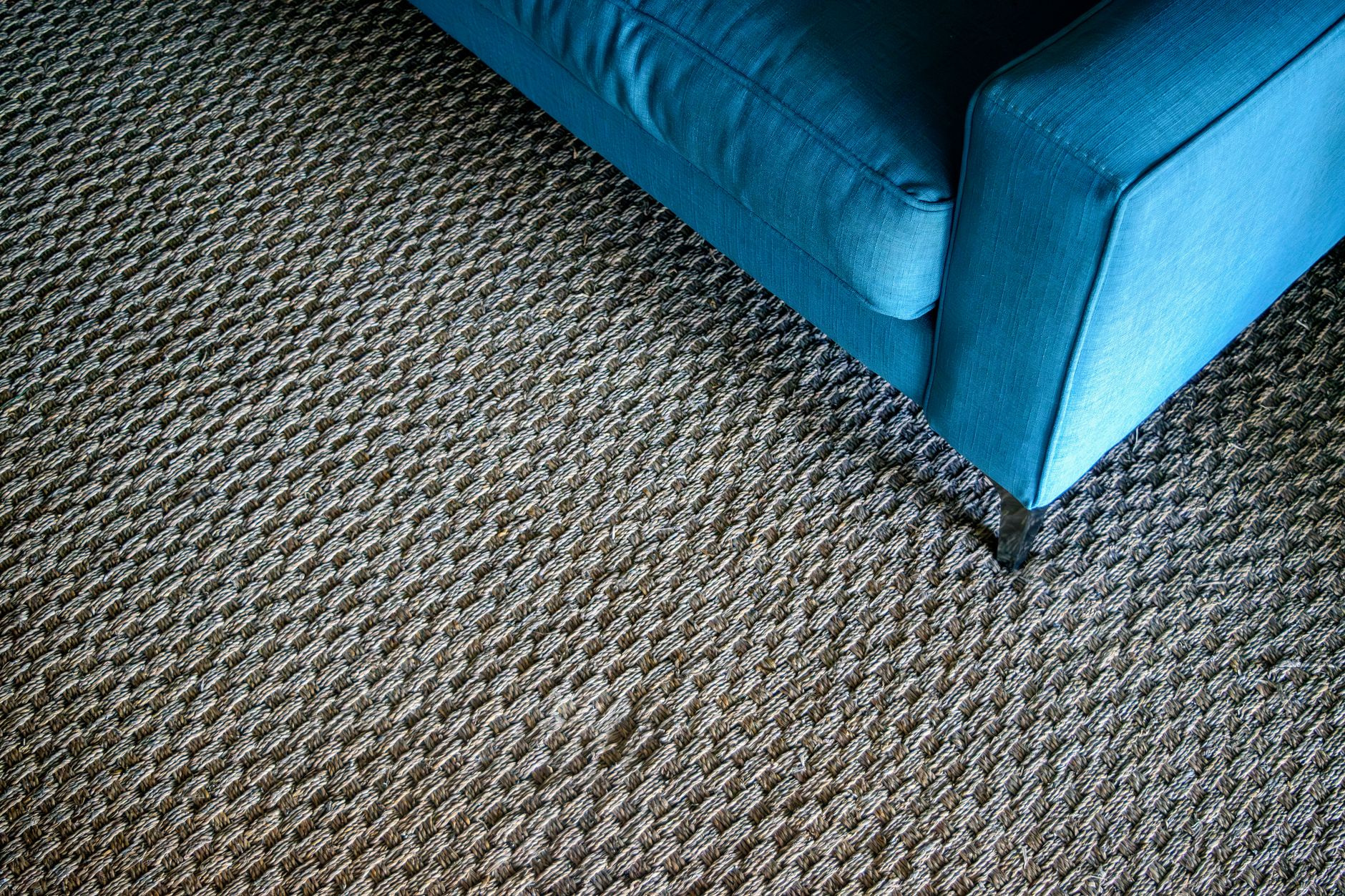
Look at the floor height where the carpeted room meets a hallway or kitchen with hard flooring. If the carpet sits noticeably higher than the adjoining floor, there’s often a wood floor underneath taking up that extra thickness. A quick pull test at a closet corner or heating vent confirms it in minutes, with no tools beyond a flathead screwdriver.
Pennsylvania homes are unusually good candidates for this. The state has the fourth-oldest housing stock in the country, with a median build year of 1965 and a quarter of homes dating before 1940 (U.S. Census Bureau, American Community Survey 2020-2024 5-year estimates). Wall-to-wall carpet became standard in the 1950s through 1970s, often installed directly over narrow-strip oak that builders considered a subfloor finish, not a showpiece. That oak is frequently still down there, untouched for half a century.
What’s the fastest way to check without pulling up carpet?
Compare floor heights at every doorway and threshold in the house. A step-up or step-down between a carpeted room and an adjacent room with vinyl, tile, or exposed wood usually means the carpeted room has its own hard flooring layer beneath the carpet and pad, raising it relative to rooms that don’t.
This isn’t proof by itself — a plywood subfloor with extra underlayment can also raise a room slightly — but a difference of half an inch or more is a strong lead worth following up with a physical look.
What do baseboards and floor vents tell you?
Look at the baseboard along the wall. If it stops well above the current carpet line and there’s a visible gap or a strip of quarter-round trim covering that gap, the baseboard was likely installed to meet a hardwood floor, not carpet. Carpet installers usually run carpet right up to the baseboard with no reveal.
Floor heating vents and radiator covers are another tell. Pull one up slightly, or look at its underside if it’s loose. A wood floor edge finished neatly around the vent opening — rather than carpet tucked and taped — means someone finished that floor as a floor, not as a base layer meant to be covered forever.
Can you check from the basement or crawl space?
Yes, and it’s often the most reliable non-destructive method in a Pennsylvania rowhouse or older single-family home with an unfinished basement. Stand below the room in question and look up at the underside of the subfloor between the joists.
- Diagonal 1×6 or 1×8 boards running at 45 degrees to the joists point to an older plank subfloor common in pre-1940s construction — hardwood finish flooring is commonly nailed directly on top of this.
- Plywood sheathing running square to the joists is more typical of postwar construction and doesn’t rule out hardwood above it, but it’s less of a giveaway on its own.
- Nail patterns visible from below — rows of small nail points coming through in straight lines spaced two to three inches apart — usually indicate strip hardwood nailed from above.
The old Pennsylvania houses flooring guide covers these subfloor types in more depth, including why diagonal plank subfloors behave differently than plywood when a floor is sanded or refinished later.
What does a small carpet pull reveal?
A one-inch peek in an inconspicuous spot — a closet, under a radiator, near a floor register — is the definitive check. Lift the carpet edge from the tack strip along a wall, fold it back a few inches, and look.
What’s commonly found under carpet in Pennsylvania homes:
- Narrow-strip oak or maple, 1.5 to 2.25 inches wide, often in reasonable condition if it was covered before it wore through. This is the outcome worth having.
- Painted or unfinished pine subflooring with no separate finish floor — common in additions, second floors of older farmhouses, or rooms that were carpeted from new construction.
- 9-by-9-inch vinyl composition tile, especially in homes built or renovated between roughly 1940 and 1980. Tile of this size and era can contain asbestos. Testing by an accredited laboratory is the only reliable way to know, and that’s a step to take before any sanding, cutting, or removal — not a determination to make by eye.
Fold the carpet back exactly as it was and set something heavy on it if there’s any uncertainty about what’s underneath, especially with older tile. There’s no urgency to decide anything on the spot.
Does the age of the house actually matter here?
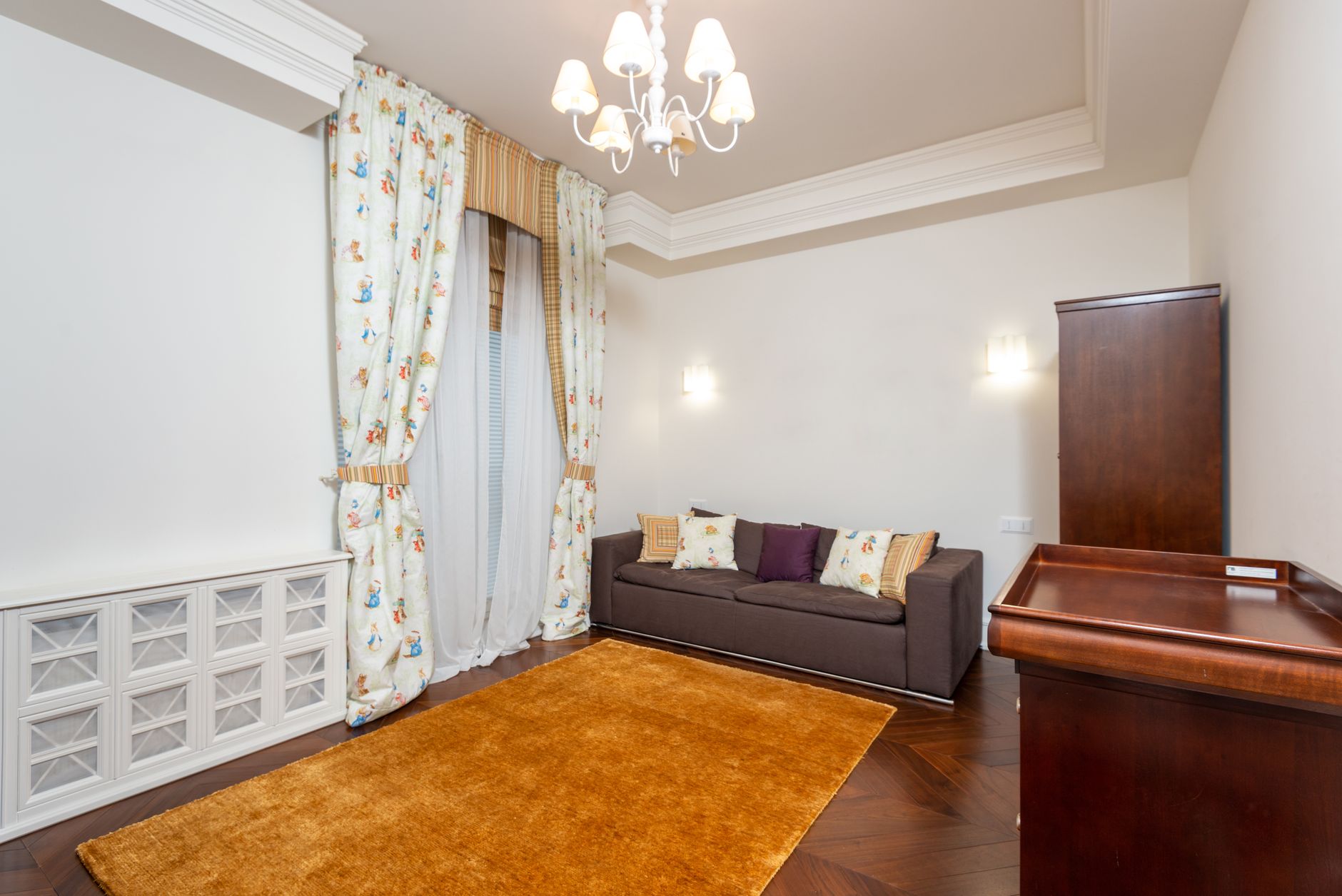
It’s the single best predictor. Homes built before roughly 1960 in Pennsylvania overwhelmingly used solid strip hardwood as the standard finish floor in living rooms, dining rooms, and bedrooms — carpet, vinyl, and later laminate came later, on top. Homes built from the 1960s onward were increasingly built with carpet as the intended finish from day one, over plywood or particleboard with no hardwood layer at all.
City age skews the odds further. Reading (median 1938, 56.9% pre-1940), Lancaster (1938, 53.8%), and Scranton (1938, 51.8%) have housing stock old enough that hardwood under carpet is a reasonable default assumption in an unrenovated room. Philadelphia (1949, 39.9% pre-1940) and Pittsburgh (1942, 48.3%) follow closely. The Pennsylvania flooring by city guide breaks down build-year data for all nine cities this site covers.
What if there’s no hardwood — what’s underneath instead?
Sometimes the answer is: nothing worth keeping. A plywood or oriented strand board subfloor with no finish layer is common in additions, split-levels, and any room built with carpet as the original plan. In that case, the carpet isn’t hiding a floor — it is the floor, functionally, and replacing it means choosing a new finish material rather than uncovering an old one.
The flooring materials guide covers the eight common options and where each one fits — luxury vinyl plank and laminate both install directly over a bare subfloor without needing anything structural underneath, which makes them straightforward choices when there’s no hardwood to work with.
What does it cost once hardwood is confirmed?
If sound hardwood is under the carpet, refinishing it typically runs $3 to $8 per square foot, well below installing a new floor of any material. That range covers sanding, staining if desired, and finish coats, and it assumes the floor is structurally sound with no major water damage or missing boards. These are planning figures; the actual number for a specific room depends on the wood’s condition, the finish chosen, and local labor rates, and it’s worth running the specifics through the flooring cost estimator rather than relying on a general range.
Removing carpet and pad before refinishing generally falls into the $1 to $4 per square foot range for tear-out and disposal — again a planning figure, not a quote. If the hardwood turns out to be too damaged to save, replacing it entirely runs $6 to $21 per square foot installed, with the wide spread driven by wood species, plank width, and finish. The refinish-or-replace guide walks through how to judge which side of that decision a given floor lands on. The Pennsylvania flooring cost hub has the full range breakdown by material and city for comparison.
Frequently asked questions
Will pulling back a corner of carpet damage it?
A small, careful pull at a wall edge — where carpet meets the tack strip — generally re-lays without visible damage, especially near a closet or under furniture where it won’t be noticed if the fibers loosen slightly.
Is it possible to have hardwood in some rooms and not others?
Yes, this is common. Original living and dining rooms often got hardwood while additions, enclosed porches, or upstairs bedrooms added later did not. Check room by room rather than assuming one answer for the whole house.
What if the floor underneath is painted?
Painted floors were sometimes finish floors themselves, especially in older farmhouses and rowhomes, and sometimes subfloors never meant to be seen. Whether it’s worth sanding down to bare wood or worth stripping and refinishing as-is depends on the wood grade underneath the paint, which usually isn’t visible until a small test area is stripped.
Does finding old tile under carpet mean it contains asbestos?
Not necessarily, but 9-by-9-inch vinyl composition tile from roughly 1940 to 1980 is the category most associated with asbestos content historically. A sample test by an accredited laboratory is the only way to know for a specific floor, and that step should come before any cutting, sanding, or removal.
More on identifying original flooring in older Pennsylvania homes is collected in the old Pennsylvania houses archive.
PA Floors is an independent Pennsylvania flooring resource. We do not sell or install flooring, we do not quote jobs, and nobody from this site will call you. Cost figures here are published planning ranges for Pennsylvania, not quotes — what you actually pay depends on your rooms, your subfloor and the material you choose, and the final price depends on your project. Photography is licensed stock used to illustrate materials and rooms; it is not work by anyone connected to this site. Building code and permit requirements are enforced locally in Pennsylvania, so confirm anything regulatory with your own municipality before you rely on it.
Any prices mentioned are indicative only. Tool prices move constantly and vary by market, by retailer, and by whether a kit includes batteries or a charger — check the current price yourself before deciding.
Featured image: Photo by Thomas Parker via Pexels.